Introduction: Why Custom Cabinet Private Label Matters for Your Business
If you are a bathroom vanity distributor, contractor, or retailer looking to expand your product line without building a factory from scratch, a custom cabinet private label partnership is likely your most strategic move. In today’s competitive global market, having your own brand—rather than selling generic products—allows you to differentiate, build customer loyalty, and command better margins. However, not all private label suppliers are created equal. Many buyers rush into partnerships only to face delayed shipments, inconsistent quality, or poor communication. This article is written specifically for overseas wholesalers, engineering project buyers, and brand operators who need a clear, actionable guide to selecting a reliable custom cabinet private label manufacturer. We will cover the real-world business scenarios you face, compare different sourcing options, and show you how to turn a private label agreement into a long-term competitive advantage.
Core Content: What You Must Know Before Signing a Custom Cabinet Private Label Agreement
A private label arrangement goes far beyond simply slapping your logo on a product. It involves design adaptation, material selection, packaging customization, quality control alignment, and often logistical coordination. Here are the key elements every buyer should evaluate:
1. Design and Specification Flexibility
Your brand identity depends on offering products that look different from your competitors. A good private label partner must allow you to choose cabinet styles, colors, hardware finishes, and sizes. For example, if you serve the North American market where 30-inch and 36-inch vanities are standard, your supplier should accommodate those dimensions without forcing you into their existing mold. Look for manufacturers that offer 3D renderings or sample production before bulk orders.
2. Material and Craftsmanship Standards
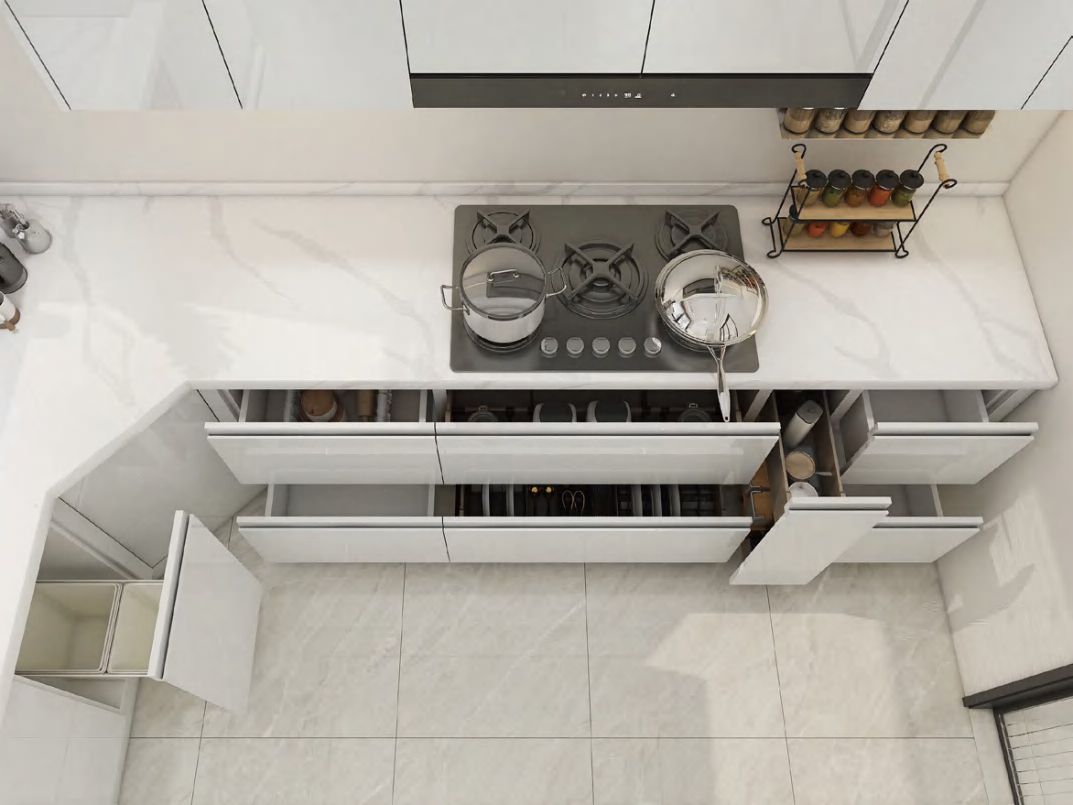
Private label success hinges on consistent quality. You must understand what materials your supplier uses—solid wood, plywood, MDF, or particle board. Each material impacts durability, moisture resistance, and price point. For high-end projects, solid wood or marine-grade plywood is preferred; for budget-conscious retail, high-density MDF with waterproof coating may suffice. Ask for material certifications and request third-party test reports if possible.
3. Minimum Order Quantities (MOQs) and Lead Times
Many overseas buyers face a dilemma: small orders for testing versus large orders for cost savings. A flexible private label partner should offer tiered MOQs. For instance, you might start with 50 units for a test run, then scale to 500 units once demand grows. Equally important is lead time. A standard production cycle of 30–45 days is reasonable, but some factories can expedite to 20 days for an additional fee. Always clarify penalties for late delivery in your contract.
4. Branding and Packaging Customization
Your brand logo, box design, and instruction manuals must align with your local market expectations. Some suppliers offer free logo printing for orders above a certain volume, while others charge extra. Ensure your private label agreement covers: cabinet body logos, hardware branding, packaging carton printing, and assembly guide customization. Poor packaging can damage your brand image even if the product is excellent.
5. After-Sales Support and Warranty
A private label partnership is not a one-time transaction. You need a supplier that stands behind their products. Ask about warranty terms: 1-year, 2-year, or 5-year coverage? What about replacement parts for damaged items? A responsible manufacturer will stock spare components for at least two years after production ends.
Comparison Module: Custom Cabinet Private Label vs. Generic Sourcing vs. In-House Manufacturing
To help you make a data-driven decision, we have prepared a side-by-side comparison of three common sourcing approaches. This table highlights key dimensions that matter to overseas bathroom cabinet buyers.
As you can see, custom cabinet private label offers the best balance of brand ownership, differentiation, and manageable investment for most mid-sized to large distributors and project buyers.
Content Summary: Turning a Private Label Partnership into a Strategic Asset
Choosing the right custom cabinet private label partner is not just about finding a cheap supplier. It is about building a long-term collaboration that supports your market positioning, responds to your customers’ preferences, and protects your brand reputation. Start by clearly defining your target market’s size,style, and price preferences. Then use the comparison table above to evaluate potential partners. Always request samples, visit the factory if possible, and negotiate a clear contract covering design ownership, quality standards, delivery terms, and after-sales support. When done correctly, private labeling transforms a commodity product into a branded solution that commands higher margins and customer loyalty.
Why Choose Us for Your Custom Cabinet Private Label Needs
At Sunvin Ceramics, we understand that your brand is your most valuable asset. Our custom cabinet private label service is designed to help overseas distributors, contractors, and retailers build a unique product line without the headaches of managing production. Here is why we stand out:
Flexible Customization with Professional Design Support – We offer a wide range of material options and style choices for custom cabinets. Our professional designers provide exclusive design drawings based on your specific requirements, ensuring your brand stands out in any market.
Strict Quality Control from Raw Materials to Finished Products – We carry out full-process inspection using professional testing instruments, including dimensional measurement tools, durability testers, and water absorption testers. Every cabinet is checked for wax removal, anti-pollution, pinhole and scratch, gloss, flatness, and size before shipment.
Reliable Delivery and Scalable Capacity – Our factory, covering over 5,000 square meters with fully automated intelligent systems, has a daily capacity of up to 14,000 square meters. Whether you need 50 units for a test order or 5,000 units for a large project, we deliver on time.
One-on-One Service with Global Market Experience – Our sales team has in-depth knowledge of Western Europe, North America, and Central and South America markets. We provide timely responses, professional export documentation, and complete after-sales support to solve all your cooperation troubles.
Ready to start your custom cabinet private label journey? Contact us today for a free quote and let us help you build a brand that wins. Request a sample now and see the difference firsthand.
