If you are sourcing kitchen cabinet and wardrobe set for a large-scale residential project, hotel renovation, or housing development, you are not just buying furniture — you are making a long-term investment in function, style, and durability. For overseas bathroom cabinet wholesalers, contractors, and brand distributors, the challenge is not finding a supplier, but finding the right supplier — one that can deliver consistent quality, meet lead times, and handle complex customization requirements under one roof.
This article is a practical guide for procurement professionals evaluating suppliers of kitchen cabinet and wardrobe set. We will walk through the key decision-making factors, compare supplier types, and show how to reduce risk when placing bulk orders.
When you source a kitchen cabinet and wardrobe set from a single manufacturer, you gain three immediate advantages: design consistency, logistics simplification, and cost efficiency.
Design consistency: Matching finishes, hardware, and dimensions across kitchen and wardrobe units ensures a unified interior look — a growing requirement in modern real estate and hospitality projects.
Simplified logistics: One supplier means one shipping schedule, one set of documentation, and fewer coordination headaches.
Cost efficiency: Bulk orders combining both product categories often qualify for better pricing per unit and reduced freight costs.
However, not all suppliers can manage both categories with equal quality. That is why a structured evaluation process is essential.
The biggest fear for any buyer placing a bulk order is late delivery. You need a supplier with proven production capacity to handle both kitchen cabinet and wardrobe set orders simultaneously.
Ask for daily or monthly output figures specific to these product lines.
Verify if the factory runs automated production lines — this directly affects speed and consistency.
Confirm lead time for sample production and mass production separately.
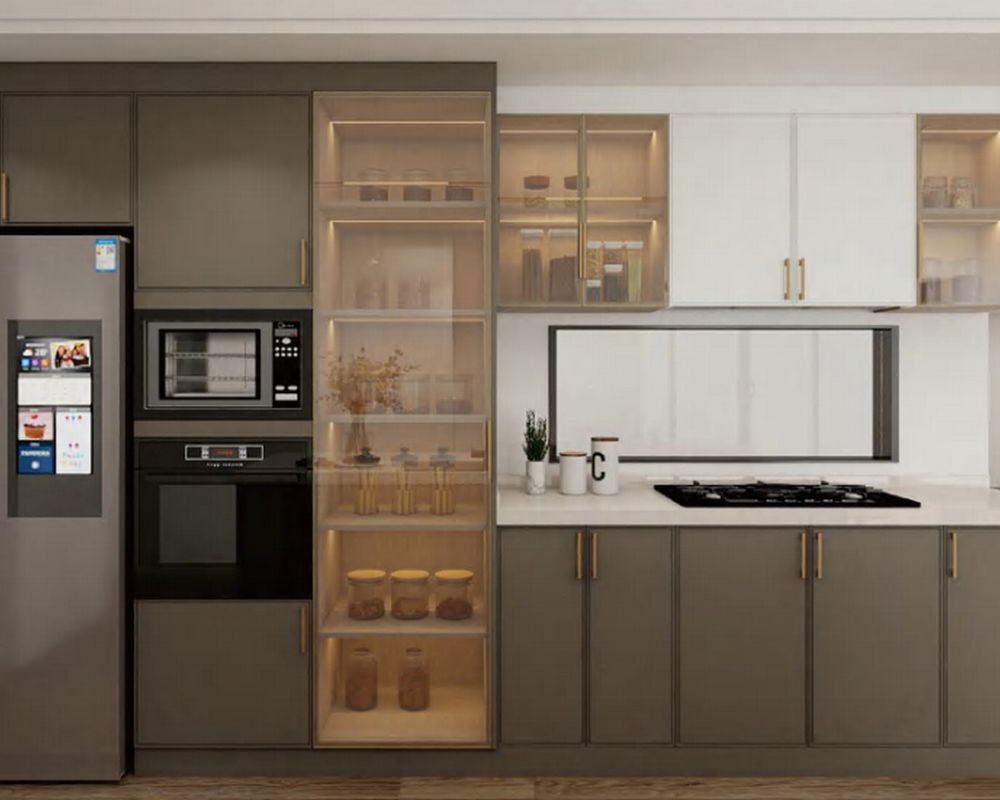
Different projects require different dimensions, materials, and finishes. A good supplier should offer:
Multiple material options (plywood, MDF, particle board with melamine or veneer finishes)
Flexible sizing for non-standard spaces
Hardware upgrades (soft-close hinges, full-extension drawer slides)
Color and texture matching across kitchen and wardrobe units
Without rigorous QC, a kitchen cabinet and wardrobe set can suffer from edge banding defects,panel warping, or hardware misalignment. Look for:
Incoming material inspection
In-process quality checks during cutting, edge banding, and assembly
Final inspection before packing
Testing for moisture resistance, surface durability, and structural stability
International buyers need a supplier familiar with export procedures, customs documentation, and shipping logistics. Key indicators include:
Experience with your target market regulations
Ability to provide packing lists, commercial invoices, and certificates of origin
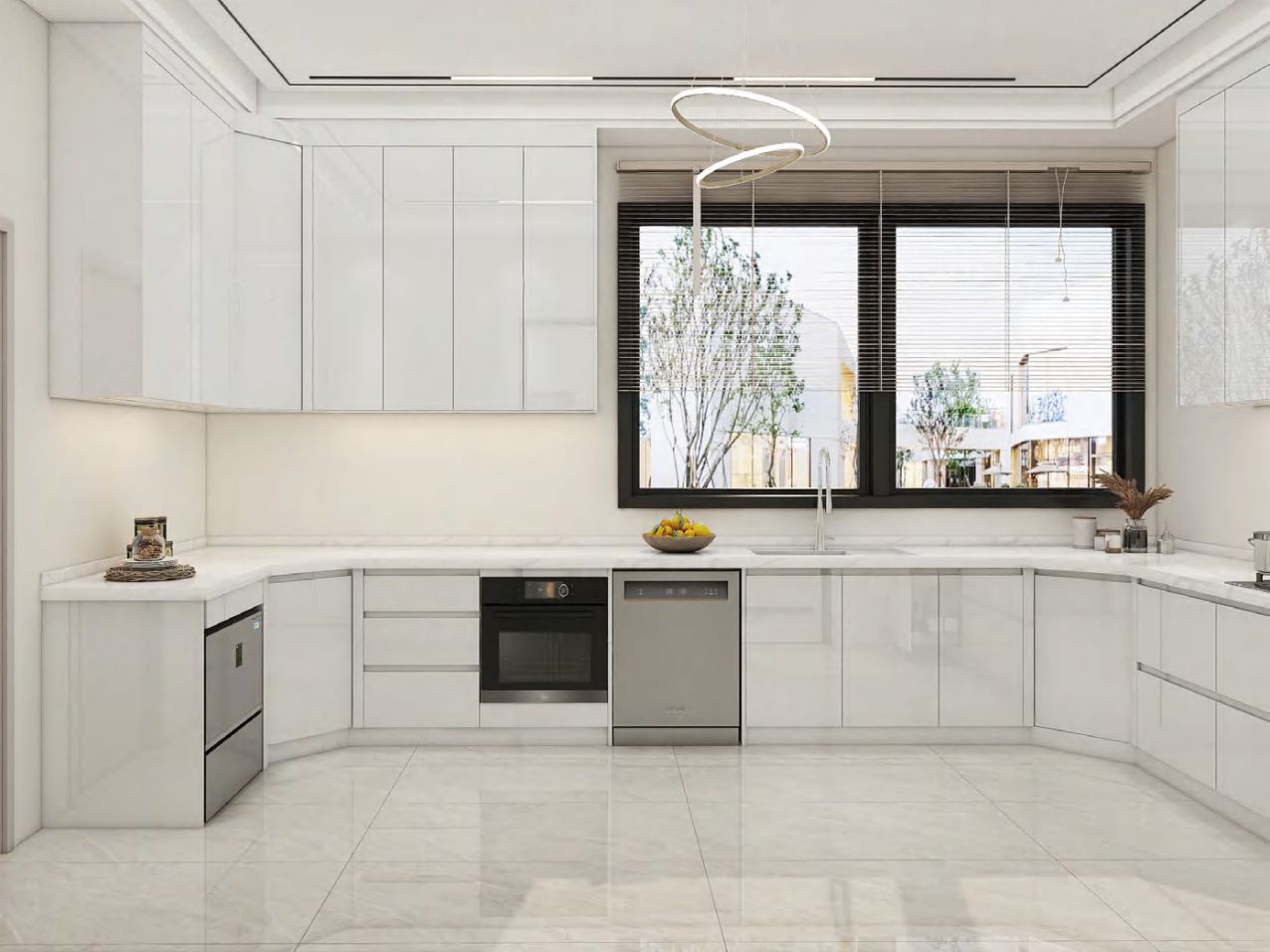
Experience in container loading optimization to reduce shipping damage
A full-service supplier reduces your risk across every stage — from design to delivery.
Low-cost suppliers often cut corners on material quality, hardware, or surface finishing. This leads to high defect rates and customer complaints.
Never place a bulk order without approving a production sample. This is the only way to verify dimensions, color accuracy, and assembly quality.
Poor packing causes scratches, dents, and broken parts during international shipping. Ask for photos of actual container loading and packing method.
Know the warranty period and what it covers. A reliable supplier should cover manufacturing defects and offer replacement parts or solutions.
Follow this step-by-step approach:
1. Create a shortlist of 3–5 suppliers based on production capacity and product range.
2. Request a detailed quotation that includes FOB price, MOQ, lead time, and payment terms.
3. Request samples of both kitchen and wardrobe units — preferably a full assembled sample if possible.
4. Conduct a factory audit (in-person or video call) to see the production line and QC process.
5. Check references — ask for contact details of buyers who ordered similar product combinations.
6. Negotiate terms that include clear delivery milestones and penalty clauses for late delivery.
Choosing the right supplier for a kitchen cabinet and wardrobe set is a strategic decision that affects your project timeline, budget, and end-user satisfaction. Focus on suppliers with proven capacity, strong customization capabilities, rigorous quality control, and reliable export experience. Avoid shortcuts like price-only decisions or skipping sample approval — they almost always lead to problems downstream.
At Sunvin Ceramics, we understand that sourcing a kitchen cabinet and wardrobe set for bulk projects requires more than just a product list — it demands precision, reliability, and partnership.
Customization expertise: We offer flexible cabinet solutions with multiple material options and professional design support, allowing you to match different project requirements exactly.
Strong production capacity: Our factory spans over 5,000 square meters with automated production lines capable of handling large-volume orders efficiently — daily output up to 14,000 square meters across our tile lines, and dedicated cabinet production for quick turnaround.
Full-process quality control: From raw material inspection to final loading checks, our QC team uses professional instruments to ensure every unit meets dimensional, surface, and structural standards.
Global export experience: With 17 consecutive years of international exhibition participation and certifications including SGS and SASO, we know how to handle documentation, logistics, and after-sales support for markets worldwide.
Contact us today for a free quote on your next kitchen cabinet and wardrobe set project.
