Sourcing Custom Kitchen Cabinet and Wardrobe Sets: A Buyer’s Guide to Space Optimization and Cost Efficiency
For homeowners, interior designers, and renovation contractors in North America and Europe, the demand for integrated living solutions is at an all-time high. The era of treating kitchens and bedrooms as isolated silos is fading. Today,buyers are looking for cohesive aesthetics that maximize utility without compromising style. This is where the kitchen cabinet and wardrobe set concept becomes critical. It is not merely about buying furniture; it is about securing a unified design language that streamlines procurement, reduces installation complexity, and enhances property value.
However, sourcing these sets presents unique challenges. Unlike standard off-the-shelf items, custom cabinetry requires precise coordination between manufacturers, logistics providers, and on-site installers. Missteps in material selection, dimensioning, or supply chain management can lead to costly delays and aesthetic mismatches. For B2B buyers—such as hotel developers, real estate investors, and large-scale retailers—the ability to source reliable, high-quality custom sets directly from manufacturers is a significant competitive advantage.
This guide explores how to effectively source kitchen cabinet and wardrobe sets, focusing on material durability, design coherence, and supplier reliability. We will break down the decision-making process for bulk buyers and help you avoid common pitfalls in the custom furniture supply chain.
Design Coherence and Material Selection
The primary challenge in sourcing a kitchen cabinet and wardrobe set is ensuring visual harmony across different functional zones. Kitchens require materials resistant to heat, moisture, and frequent cleaning, while wardrobes prioritize storage organization and aesthetic appeal. A successful set must balance these conflicting requirements without sacrificing style.
When evaluating options, buyers must consider the substrate and finish. High-pressure laminate (HPL) and melamine-faced chipboard remain popular for budget-conscious projects due to their affordability and durability. However, for premium residential and hospitality projects, solid wood veneers or acrylic finishes offer superior tactile quality and longevity. The key is consistency; the grain pattern, color tone, and hardware finishes must align perfectly between the kitchen units and wardrobe closets.
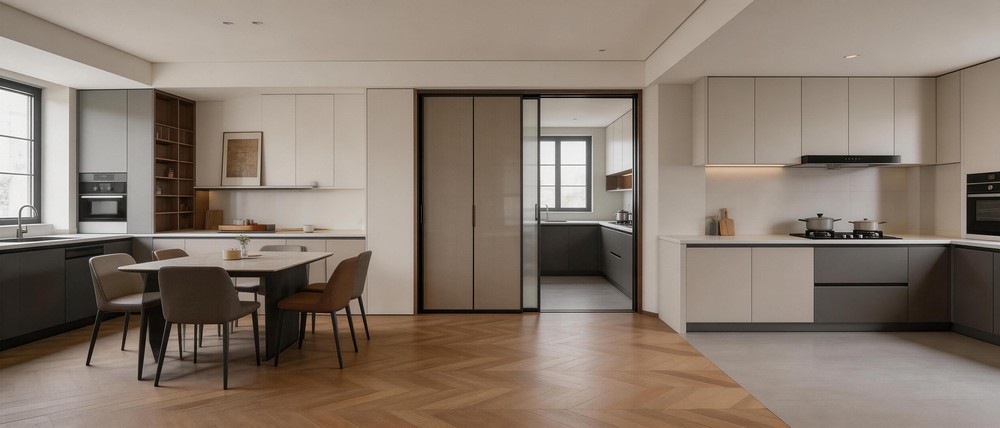
Furthermore, functionality cannot be overlooked. Modern kitchen cabinets need robust hinge mechanisms and pull-out organizers to handle heavy cookware. Similarly, wardrobe sets require modular shelving systems, lighting integration, and ventilation to prevent mold in humid climates. Buyers should insist on samples that demonstrate both the aesthetic finish and the mechanical quality of these components.
Supply Chain Efficiency and Production Capacity
For wholesalers and contractors, the lead time and production capacity of the supplier are just as important as the product itself. A fragmented supply chain, where kitchen cabinets come from one factory and wardrobes from another, introduces significant risk. Mismatched deliveries, inconsistent quality control, and complex logistics coordination can derail a project timeline.
Sourcing a kitchen cabinet and wardrobe set from a single manufacturer with comprehensive production capabilities eliminates this risk. Ideally, the supplier should possess a factory capable of handling both ceramic tile flooring (often used in kitchens) and wooden cabinetry, ensuring seamless integration. Large-scale manufacturers with automated production lines can guarantee consistent color matching and precise dimensions across thousands of units.
Capacity is another crucial factor. During peak seasons, small workshops may struggle to meet deadlines, leading to delays in hotel openings or property handovers. Buyers should verify the supplier’s daily output and inventory of raw materials. A reliable partner will have a buffer stock of core materials and a streamlined workflow that prioritizes large orders without compromising quality.
Comparison: Standard Modular vs. Fully Custom Sets
To help buyers make informed decisions, it is essential to compare standard modular solutions against fully custom integrated sets. While modular units offer quick availability, they often lack the flexibility required for non-standard room layouts. Custom sets, though requiring longer lead times, provide a tailored fit that maximizes every inch of space.
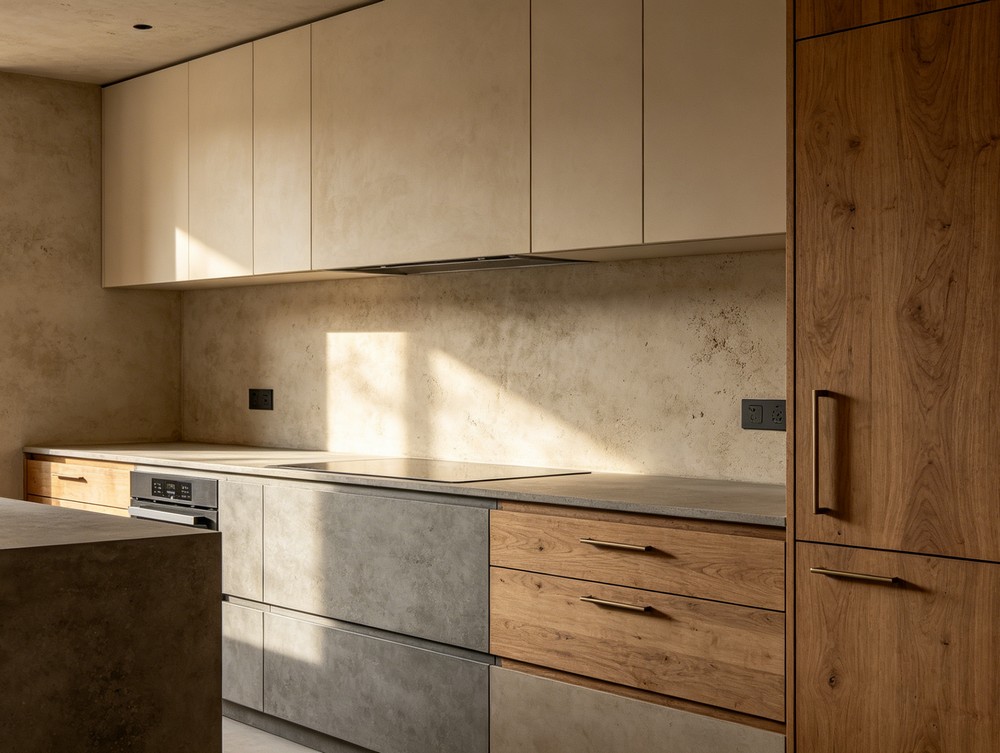
For large-scale projects like apartments or hotels, the custom integrated set approach often yields better long-term value. The reduction in on-site adjustment time and the elimination of mismatched aesthetics justify the slightly higher upfront investment.
Quality Control and Certification Standards
In the international trade of furniture, quality assurance is paramount. Buyers must ensure that the kitchen cabinet and wardrobe set meets the safety and environmental standards of the target market. In Europe, this means compliance with E1 or E0 formaldehyde emission standards. In North America, CARB Phase 2 compliance is often required. Additionally, fire-retardant properties for kitchen materials are critical for commercial applications.
A reputable manufacturer will provide third-party certification reports from agencies like SGS or CE. These documents verify not only the material composition but also the structural integrity of the cabinets. For bathroom and kitchen applications, water resistance testing is mandatory. Buyers should request detailed test reports on water absorption rates and dimensional stability under humidity changes.
Moreover, packaging and loading protocols significantly impact product condition upon arrival. Poor packing can lead to chipped edges and scratched surfaces during transit. Effective suppliers use multi-layer protection, including foam inserts, corner guards, and shrink wrapping, to ensure that every piece arrives in pristine condition.
Conclusion: Strategic Sourcing for Better Outcomes
Sourcing a kitchen cabinet and wardrobe set is a strategic decision that impacts the overall success of a construction or renovation project. By prioritizing design coherence, verifying production capacity, and enforcing strict quality controls, buyers can mitigate risks and enhance the final product’s value. Whether you are a wholesaler expanding your catalog or a contractor managing a large-scale development, partnering with a versatile, experienced manufacturer is key to delivering excellence.
Focus on suppliers who offer end-to-end solutions, from design consultation to logistics support. This approach simplifies your supply chain, ensures consistent quality, and ultimately delights your end customers with beautiful, functional spaces.
Why Choose Us
Integrated Manufacturing Capability: We produce both porcelain tiles and custom cabinetry under one roof, ensuring perfect material coordination and aesthetic consistency for your kitchen cabinet and wardrobe set projects.
High-Volume Production Capacity: With a 5,000 sqm factory and automated systems, we handle large orders efficiently, ensuring on-time delivery for wholesalers and contractors without compromising quality.
Rigorous Quality Assurance: Our multi-dimensional inspection system and international certifications (SGS, WaterMark) guarantee that every cabinet meets strict durability and environmental standards for global markets.
Custom Design Support: Our professional design team provides exclusive drawings and installation guides, helping you create tailored kitchen cabinet and wardrobe set solutions that fit any space perfectly.
Contact us today for a free quote to streamline your next project with Sunvin Ceramics.
For more ideas to improve your home, check out Sunvin Website or our other social media channels:
Sunvin - https://sunvin.com.cn/
https://www.sunvin-industry.com/
Facebook - https://www.facebook.com/SunvinSanitaryware/
https://www.facebook.com/SunvinCeramics/
Alibaba - https://sunvin.en.alibaba.com/
Instagram - https://www.instagram.com/sunvinceramics/
